
Guide
Are electric scooters good for commuting?
Yes, for the right distance. A 4 mile each-way commute is a comfortable fit for most scooters if you keep about a 40 percent range buffer over the claimed number. Over a year of weekday commuting that is about 1,920 miles, saving roughly $2,350 in gas and parking against about $65 in scooter electricity and upkeep.
Is your distance actually a good fit?
The honest answer depends on how far you are going, not whether scooters are "good." An 8 mile round trip (4 miles each way) is the classic sweet spot: short enough that even a modest battery covers it with margin, long enough to beat walking or waiting on transit. Longer commutes work too, but you need a scooter with real range headroom, not one that claims exactly your distance.
Box range claims assume a 165 lb rider, flat ground, warm weather and eco speed. Real world consumption runs 60 to 80 percent of that claim once you add your actual weight, some hills, and cooler air. Build your buffer from real range, not the sticker number.
Build in a range buffer, don't cut it close
A scooter claiming 20 miles of range should be treated as a genuine 12 to 16 miles once you subtract rider weight, imperfect flat ground and typical weather. For an 8 mile round trip, that means shopping for at least 20 to 24 miles of claimed range, not 8 to 10. The NAVEE V40 ($349.99), claimed at 25 miles, leaves a comfortable buffer for a daily 8 mile round trip with room for a cold morning or a detour.
Check the range calculator with your own weight and speed to get a realistic number before you commit to a commute distance.
Weather changes the math
| Temperature | Range impact |
|---|---|
| 50°F | about 10% less range |
| 32°F | about 20% less range |
| 14°F | about 30% less range |
Cold weather is the biggest seasonal variable in a commute. If your route is right at the edge of a scooter's real range in mild weather, it can come up short on a cold morning. Rain is a separate issue: check a listing's water resistance rating and never charge a wet scooter. Most riders keep a backup transit or rideshare plan for genuinely bad weather days rather than pushing a scooter through it.
Locking it up at work
A commuter scooter needs a real lock if it will sit outside or in a shared space during the workday. A folding lock like the Kryptonite Parkview folding lock ($27.06) packs small enough to carry on the deck or in a bag, unlike a bulky U-lock. Fold the scooter and lock the frame to a fixed rack when possible; a lock through the wheel alone is easier to defeat.
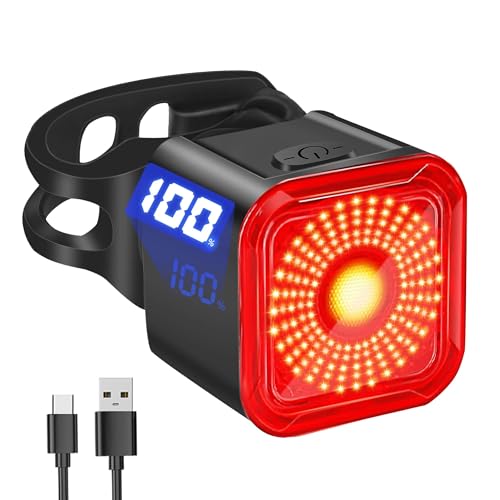
If you will be visible to traffic at either end of the ride, add a rear light such as the DARKBEAM USB-C tail light ($10.99) for early morning or evening commutes.
Cost per mile: scooter vs driving
A 4 mile each-way commute, 5 days a week, adds up to about 1,920 miles a year. Driving that same distance at 27 mpg with gas around $3.40 a gallon plus $8 daily parking costs roughly $2,350 a year. The same distance on a scooter costs about $65 a year in electricity and basic upkeep (tires, occasional parts), because a full charge runs 5 to 11 cents at typical electricity rates, well under a cent per mile.
The gap is not close. Even accounting for the scooter's purchase price, a daily commuter scooter typically pays for itself well within the first year against driving and parking costs alone.
What you need in the bag
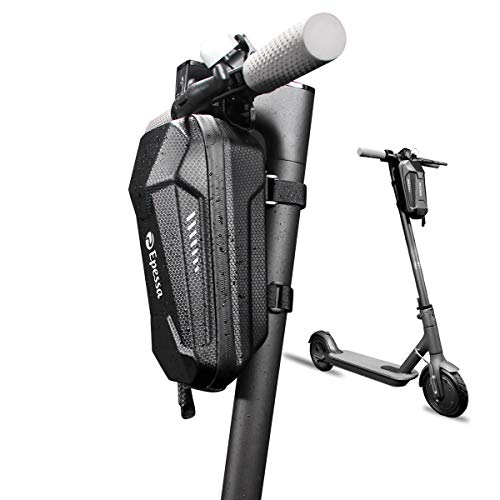
A commuter setup is more than the scooter. A small handlebar or under-deck bag like the Epessa scooter storage bag ($21.99) holds a charger, a multitool and a phone without adding bulk. Keep a compact lock and a light on the scooter itself so you are never digging for them in a rush.
Wear a helmet every ride
Commuting means riding in real traffic, often in low light. Wear a certified helmet every time, matched to your scooter's actual speed; a CPSC certified commuter helmet ($31.99) with a built-in light adds visibility for the darker end of the commute.
When a scooter commute is not the right fit
A scooter is not automatically the answer for every commute. Distances much longer than 6 to 8 miles round trip start asking a lot of a personal scooter's battery and your own patience. Routes without any bike lane or shoulder, on roads with a genuinely high speed limit, put a rider in more danger than the savings are worth. Climates with long stretches of snow and ice on the ground are also a poor match, since traction and range both suffer badly in those conditions. In any of these cases, a scooter can still work as a "last mile" solution paired with transit, rather than covering the whole trip.
What a commuter setup needs


Prices change often; the button shows today's price on Amazon.
More guides
- Electric scooter battery and charging safety
- Do you need a helmet on an electric scooter?
- Electric scooter laws, explained in patterns
- Electric scooter tires and maintenance
- Electric scooters for college campus
- How fast do electric scooters go?
- How to ride an electric scooter safely
- Going from a scooter to a skateboard
- Will an electric scooter go up a hill?
Questions riders ask
What commute distance works best on an electric scooter?
Roughly 3 to 5 miles each way is the comfortable sweet spot for most commuter scooters, assuming you shop for a scooter with real range well above that distance. Longer commutes are doable but need a scooter with genuinely large claimed range, since real world range is typically only 60 to 80 percent of the sticker claim.
How much range buffer should I plan for?
Plan for real range at roughly 60 to 80 percent of the claimed number, and then keep another margin on top of that for weather and hills. For an 8 mile round trip commute, look for a scooter claiming at least 20 to 24 miles of range so a cold morning or a detour does not leave you walking the last stretch.
Does cold weather really hurt scooter range that much?
Yes. Battery chemistry is genuinely temperature sensitive. Expect about 10 percent less range at 50°F, 20 percent less at 32°F, and 30 percent less at 14°F compared to a mild day. If your commute is already close to your scooter's real range limit in good weather, winter mornings are where it will come up short.
Is a scooter commute actually cheaper than driving?
Substantially, yes. A 4 mile each-way commute, 5 days a week, runs about 1,920 miles a year. Driving that costs roughly $2,350 a year in gas (at 27 mpg, $3.40 a gallon) and $8 daily parking. The same distance on a scooter costs about $65 a year in electricity and basic upkeep, since a full charge is typically 5 to 11 cents.
Do I need to worry about my scooter getting stolen at work?
If it will be unattended, yes. Fold it and lock the frame, not just a wheel, to a fixed rack with a real bike-grade lock, not a flimsy cable. A compact folding lock is easier to carry daily than a bulky U-lock. Parking it somewhere visible, like near a building entrance, also deters casual theft.
Wear a helmet every ride, and check your state and city rules on age, speed and where scooters may ride. This page is researched guidance, not professional, legal or medical advice. Specifications come from each product listing and can change; confirm on the listing before you buy.