
Guide
Electric scooter tires and maintenance
Most commuter scooters run 8.5 inch tires, larger long-range and off-road models run 10 inch, and either can be solid (never flats, rides harsher) or pneumatic (smoother, better grip, can flat). Check tire pressure monthly, expect pneumatic tires to last a year or two of regular riding, and check the folding latch for play before every ride.
8.5 inch vs 10 inch: what actually changes
Wheel diameter affects ride quality more than most riders expect. A 10 inch wheel rolls over pavement cracks and small debris more smoothly than an 8.5 inch wheel, because more of the wheel's circumference is in contact with the obstacle at once. That is why larger, longer-range commuter and off-road scooters tend to use 10 inch wheels while compact folding commuters stick with 8.5 inch. Neither size is "better" outright; a smaller wheel keeps the scooter lighter and easier to carry, while a larger wheel rides smoother and holds speed better over rough pavement.
When replacing a tire or tube, match the exact size printed on the old one, not just "8.5 inch" or "10 inch." An 8.5x2 inner tube like the ASDONAL 8.5x2 inner tube ($8.99) or Mcglsen 8.5 inch scooter tube ($9.99) fits the common 50/75-6.1 sizing used across most 8.5 inch commuter scooters, but always check the sidewall marking before ordering.
Solid vs pneumatic: the real tradeoff
| Pneumatic (air-filled) | Solid / honeycomb | |
|---|---|---|
| Ride comfort | smoother, absorbs small bumps | harsher, transmits more road noise |
| Grip | better, more contact and flex | lower, especially wet or cold |
| Flats | can flat on glass, nails, sharp debris | never flats |
| Rolling resistance | lower | about 50% higher, costs some range |
There is no universally correct choice. Riders who commute through debris-prone city streets and want to never worry about a flat often choose solid tires and accept the rougher ride and slightly reduced range from higher rolling resistance. Riders who prioritize comfort and grip, and are willing to carry a patch kit or sealant, lean pneumatic.
Correct tire pressure and how to check it
Pneumatic scooter tires typically run a manufacturer-specified pressure printed on the tire sidewall or in the manual, commonly in the 40 to 65 psi range depending on tire size and load. Underinflated tires increase rolling resistance (costing range) and raise flat risk from pinch punctures; overinflated tires reduce grip and make for a harsher ride. Check pressure monthly with a compact inflator like the OlarHike portable tire inflator ($22.99), which also works for topping off after a slow leak.
Dealing with a flat
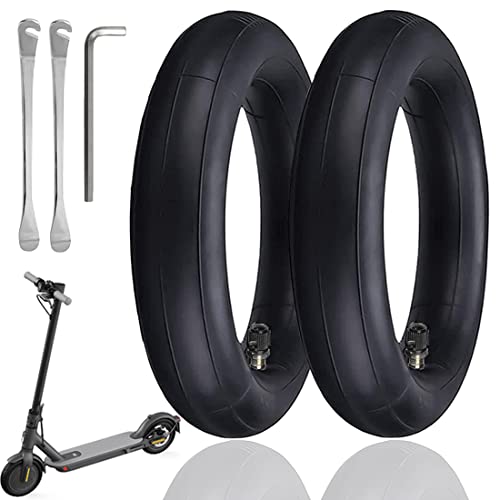
For a pneumatic tire with an inner tube, a puncture usually means replacing the tube rather than patching it on most scooter tire sizes, since the tubes are inexpensive. Keep a spare tube in the correct size on hand, like the Cooryda 8.5 inch inner tube 2-pack ($9.99), so a flat is a five-minute swap rather than a scooter sitting unused for a week. Tubeless and tube-type tires can also use a sealant poured inside to self-seal small punctures before they go fully flat; check whether your specific tire is tube-type or tubeless before adding sealant.
How long tires actually last
Pneumatic tires on a scooter ridden regularly (several times a week) typically last a year or two before the tread wears down or the rubber starts to crack from age and UV exposure, whichever comes first. Solid tires last longer under normal wear since there is no air pressure to maintain and no puncture risk, but they eventually harden and lose grip with age, especially in cold climates. Inspect tires monthly for visible cracking, flat-spotting or embedded debris, and replace proactively rather than waiting for a failure mid-ride.
Brake pads: what to watch for
Disc brake pads wear down gradually and should be checked for remaining material every few months of regular riding; a pad worn down to a thin sliver stops less effectively and should be replaced before it wears into the rotor itself. Drum brakes and electronic (regenerative) braking need less mechanical maintenance but should still be tested regularly for consistent stopping power. If braking starts to feel weaker or noisier than it used to, do not wait for a bigger problem to check the pads.
The folding latch: a quick check before every ride
The folding latch is a single point of failure that gets overlooked because it works fine for months, right up until it does not. Before each ride, check that the latch is fully closed and locked, and periodically check for developing play or looseness in the hinge mechanism, since a latch that fails mid-ride at speed is a genuinely dangerous failure, not a minor annoyance. If a latch develops noticeable wobble, stop riding until it is tightened or replaced rather than hoping it holds.
Tires, tubes and pumps



Prices change often; the button shows today's price on Amazon.
More guides
- Are electric scooters good for commuting?
- Electric scooter battery and charging safety
- Do you need a helmet on an electric scooter?
- Electric scooter laws, explained in patterns
- Electric scooters for college campus
- How fast do electric scooters go?
- How to ride an electric scooter safely
- Going from a scooter to a skateboard
- Will an electric scooter go up a hill?
Questions riders ask
Should I get 8.5 inch or 10 inch scooter tires?
It depends on priorities more than one being objectively better. 10 inch wheels ride smoother over cracks and debris and are common on longer-range and off-road models. 8.5 inch wheels keep the scooter lighter and more compact for carrying, which matters for commuters and stairs. Match the size to how you actually use the scooter, and always replace with the exact size marked on the old tire.
Are solid tires or pneumatic tires better for a scooter?
Neither is universally better. Pneumatic (air-filled) tires ride smoother and grip better but can flat. Solid or honeycomb tires never flat but ride harsher and add roughly 50 percent more rolling resistance, which costs some range. Riders who want zero flat risk lean solid; riders who prioritize comfort and grip, and are willing to carry a spare tube, lean pneumatic.
How often should I check my scooter tire pressure?
About once a month for pneumatic tires, and after any noticeably rough ride or before a long trip. Underinflated tires raise rolling resistance and flat risk; overinflated tires reduce grip and ride harshness. Check the manufacturer-specified pressure printed on the tire sidewall or manual rather than guessing.
How long do electric scooter tires last?
Pneumatic tires ridden regularly typically last a year or two before tread wear or rubber cracking sets in. Solid tires generally last longer since there is no puncture risk, but they harden and lose grip with age, especially in cold climates. Inspect monthly for visible cracking or flat-spotting rather than waiting for a failure.
What maintenance should I check before every single ride?
The folding latch, first and most importantly, since a latch that fails at speed is a genuinely dangerous failure. Also give the tires a quick visual check for obvious damage or low pressure, and test the brakes at walking pace before you ride at full speed. These take under a minute and catch most preventable problems.
Wear a helmet every ride, and check your state and city rules on age, speed and where scooters may ride. This page is researched guidance, not professional, legal or medical advice. Specifications come from each product listing and can change; confirm on the listing before you buy.