
Guide
Electric scooter battery and charging safety
Buy a UL 2272 listed scooter, always charge it with the maker's original charger on a hard, non-flammable surface, and never leave it charging unattended overnight near an exit. A typical 281 Wh battery takes a little over 4 hours to charge on a stock 84 W charger; a larger 551 Wh battery takes about 7.5 hours.
What UL 2272 actually certifies
UL 2272 is the safety standard for the electrical drive train of personal e-mobility devices, covering the battery, charger and motor system for fire and shock hazards. It is not a ride quality or performance certification, and it does not test how the scooter handles. It tests whether the battery pack and charging system are built and protected against overheating, short circuits and thermal runaway under normal and some abnormal conditions.
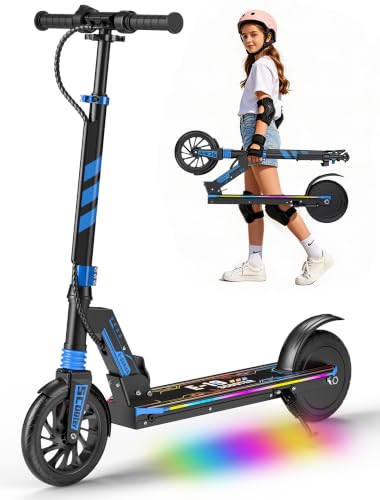
Treat UL 2272 as a floor, not a nice-to-have. Look for it explicitly stated in the listing, like the Segway Ninebot E2 Pro ($499.99) or the SmileCity electric scooter with seat ($309.98), both stated UL 2272 certified. For kids' scooters, the Aolorozo kids electric scooter ($169.98) and SIMATE 250W kids electric scooter ($189.99) are both stated UL 2272 certified as well.
Reading the V, Ah and Wh numbers
A spec sheet lists voltage (V), amp-hours (Ah) and sometimes watt-hours (Wh) directly. If only V and Ah are given, multiply them: 36V x 7.8Ah = about 281 Wh. Watt-hours is the number that actually predicts range and charging time, because it represents total stored energy, independent of the battery's voltage design.
| Spec shown | What it means |
|---|---|
| Voltage (V) | electrical pressure; higher voltage systems often support higher power motors |
| Amp-hours (Ah) | current capacity at that voltage |
| Watt-hours (Wh) = V x Ah | total stored energy; the number that predicts real range and charge time |
A 281 Wh battery (36V x 7.8Ah) delivers about 14 miles of real range at 15 mph once you apply the 90 percent usable factor, versus 17 miles claimed. A larger 551 Wh battery, the size used in Segway Ninebot MAX class scooters, delivers about 27 miles real at the same speed.
How long charging actually takes
Charging time is battery energy divided by charger power, plus roughly 45 minutes of slow top-off at the end as the battery balances its cells. A stock 42V 2A charger delivers about 84 watts. On that charger, a 281 Wh battery takes a little over 4 hours; a 551 Wh battery takes about 7.5 hours. A higher wattage aftermarket charger speeds this up, but only use one rated for your exact battery voltage; mismatched chargers are a real fire risk, not a minor inconvenience.
The good news on cost: a full charge runs about 5 to 11 cents at typical electricity rates around 17 cents per kWh, well under a cent per mile of riding.
Charging safely, every time
Charge on a hard, non-flammable floor, not carpet or bedding. Never leave a scooter charging unattended overnight, and especially never block an exit with a charging scooter; the small risk of a battery fault is much worse if it blocks your way out. Always use the charger that came with the scooter, matched to its specific voltage. Unplug once charged rather than leaving it topped off for days at a time, which stresses the battery.
Storage: heat, cold and long gaps between rides
Lithium batteries dislike extremes. Store a scooter somewhere temperate rather than a hot garage or a freezing shed if you can. Cold weather also costs real range while riding: expect about 10 percent less range at 50°F, 20 percent less at 32°F, and 30 percent less at 14°F versus a mild day. If you are storing a scooter for an extended period, a partial charge (roughly half) is gentler on the battery than storing it fully charged or fully drained.
What to do if a battery feels wrong
A battery that gets unusually hot during charging, swells, smells odd or has a damaged casing should be taken out of service immediately, not "watched." Stop charging it, move it away from anything flammable, and contact the manufacturer. This is one place where a cheap replacement battery from an unverified seller is a genuinely bad trade against the cost of an original part.
Why watt-hours, not just top speed, should drive your decision
Shoppers often compare scooters by top speed or motor wattage alone, but watt-hours is the number that determines whether a scooter can actually cover your route and charge back up in time for tomorrow. Two scooters with the same 350W motor can have very different real-world usefulness if one carries a 187 Wh battery and the other carries a 374 Wh battery, since the second one covers roughly double the distance before needing a recharge. When comparing listings, look past the headline speed and range claims and check the actual battery specification.
A simple charging routine that avoids most problems
Most battery safety incidents trace back to a small handful of avoidable habits: using a mismatched charger, charging on a flammable surface, charging unattended overnight, or ignoring early warning signs like unusual heat. Build a routine instead: plug in on a hard floor when you get home, unplug once it reaches full charge rather than leaving it topped off for days, and do a quick visual check of the battery compartment every few weeks for swelling or damage. A consistent routine catches problems early, long before they become dangerous.
UL 2272 certified scooters



Prices change often; the button shows today's price on Amazon.
More guides
- Are electric scooters good for commuting?
- Do you need a helmet on an electric scooter?
- Electric scooter laws, explained in patterns
- Electric scooter tires and maintenance
- Electric scooters for college campus
- How fast do electric scooters go?
- How to ride an electric scooter safely
- Going from a scooter to a skateboard
- Will an electric scooter go up a hill?
Questions riders ask
What does UL 2272 certification actually mean?
It means the scooter's battery, charger and motor drive system were tested against a specific US safety standard for fire and electrical shock hazards. It is not a performance or ride quality rating. Treat it as a baseline safety requirement rather than an optional feature, and look for it explicitly stated in the product listing.
How long does it take to charge an electric scooter?
Roughly battery watt-hours divided by charger watts, plus about 45 minutes of top-off. A common 281 Wh battery on a stock 84 watt charger takes a little over 4 hours. A larger 551 Wh battery, the size in Segway Ninebot MAX class scooters, takes about 7.5 hours on the same charger power.
What do the V, Ah and Wh numbers on a scooter spec sheet mean?
Voltage (V) is electrical pressure, amp-hours (Ah) is current capacity at that voltage, and watt-hours (Wh) is voltage times amp-hours, the total stored energy. Watt-hours is the number that actually predicts range and charging time, so if a listing only shows V and Ah, multiply them to get the comparable Wh figure.
Is it safe to leave a scooter charging overnight?
It is safer not to, and specifically never near an exit or while you are asleep in a way that would delay you noticing a problem. Charge on a hard, non-flammable surface with the maker's original charger, and unplug once it reaches full charge rather than leaving it topped off indefinitely.
Does cold weather actually reduce battery range?
Yes, meaningfully. Expect about 10 percent less range at 50°F, 20 percent less at 32°F, and 30 percent less at 14°F compared to a mild day, because lithium battery chemistry slows down in the cold. If your commute is already near your scooter's real range limit, plan for a shorter effective range on cold mornings.
Wear a helmet every ride, and check your state and city rules on age, speed and where scooters may ride. This page is researched guidance, not professional, legal or medical advice. Specifications come from each product listing and can change; confirm on the listing before you buy.