Guide
Electric scooters for college campus
Campus riding is less about speed and more about three things: locking it up between classes, a weight you can actually carry up a dorm stairwell, and enough range for a full day of back-and-forth trips without a midday charge. Check your specific school's policy before buying, since campuses regulate electric scooters very differently from public streets.
Campus rules vary more than city rules
Unlike public streets, where state law sets the baseline, colleges write their own scooter policies and they vary widely: some ban electric scooters from academic buildings and quads entirely, some require registration, some restrict speed on paths, and some treat electric scooters the same as bikes. Check your specific school's transportation or public safety page before buying, since a campus rule can be stricter than the state law that applies just outside the gates. Also check your dorm or housing policy directly; battery storage and charging in a residence hall is a separate rule from riding it outside.
Locking it up between classes
A scooter left unlocked outside a lecture hall for an hour is an easy target on a campus with thousands of people passing by. A compact folding lock like the Kryptonite Parkview folding lock ($27.06) is small enough to carry into class in a backpack, unlike a bulky U-lock, and still secures the frame to a bike rack. Always lock through the frame to something fixed, not just through a wheel, and pick a well-trafficked rack over a quiet corner.
How much weight can you actually carry up the stairs?
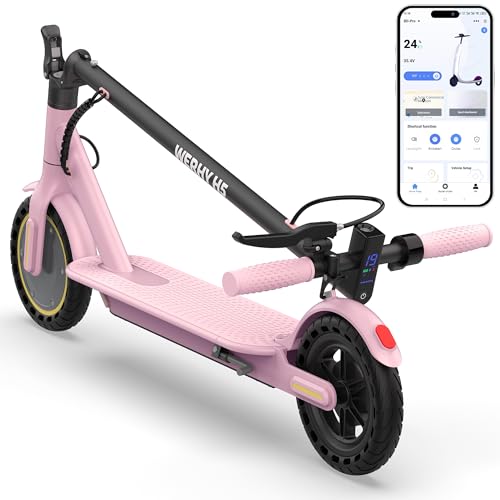
Not every dorm has an elevator, and folding a scooter to carry it up three or four flights is a real daily task, not a one-time inconvenience. A budget commuter scooter like the VOLPAM 350W/500W electric scooter ($159.99) is on the lighter end of the adult category and easier to carry one-handed than a larger long-range model. If your building has stairs and no freight elevator, weigh this more heavily than top speed or range: a scooter that is genuinely unpleasant to carry gets left downstairs, unlocked, or not used at all.
Range for a full class schedule
A typical class day means multiple round trips: dorm to a morning class, class to the dining hall, dining hall to another building, and back at night. That adds up faster than a single commute. A scooter like the NAVEE V40 ($349.99), claimed at 25 miles, gives real range in the mid-teens once you apply the 60 to 80 percent real-world factor, enough to cover a full day of campus trips without hunting for an outlet between classes.
Weighing the tradeoffs at a glance
| Priority | What to shop for |
|---|---|
| Lots of stairs, no elevator | lighter commuter scooter over a heavier long-range one |
| Large campus, full day of classes | higher claimed range, at least double your longest single trip |
| Bike racks everywhere | a compact folding lock you will actually carry |
| Strict dorm charging rules | confirm the policy before buying, not after |
Charging in a shared space
Many dorms restrict where and how batteries can charge, sometimes banning charging overnight in rooms entirely. Always use the scooter's original charger, charge on a hard surface rather than a rug or bedding, and never leave it charging unattended while you are in class or asleep. Check your housing handbook specifically; some schools have added scooter and e-bike battery rules in response to fire risk.
A helmet and a bag for the daily essentials
Short campus rides feel low risk, which is exactly when people skip the helmet. Wear one anyway; a lightweight CPSC certified commuter helmet ($31.99) is easy to clip to a backpack between classes and matters just as much on a five minute ride across the quad as on a longer commute.
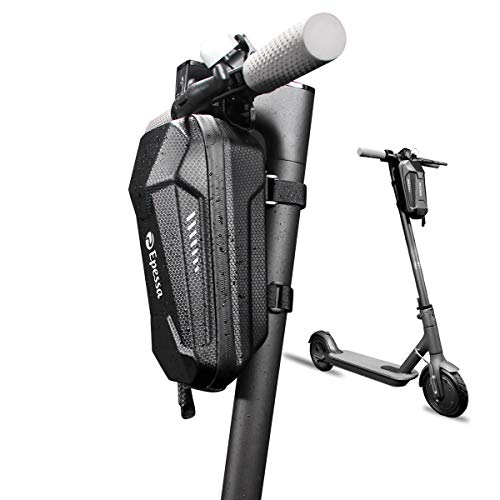
A small handlebar bag like the Epessa scooter storage bag ($21.99) keeps a charger, lock and phone off your back and on the scooter itself, which matters when you are also carrying textbooks or a laptop bag. It also frees up your backpack for the actual coursework, rather than competing for space with a charger and cable.
Sharing paths with pedestrians and bikes
College campuses concentrate a lot of foot traffic in a small area, especially between classes when hundreds of students move through the same paths at once. Ride at a noticeably lower speed than you would on an open street, especially near building entrances, crosswalks and anywhere paths narrow. Many campus scooter complaints and eventual bans come from a small number of riders going too fast through crowded areas, so riding considerately is also a way of protecting everyone else's ability to keep using scooters on campus at all.
Buying used or borrowing versus buying new
A semester or two of use is a real consideration for some students weighing cost against a scooter that will mostly get used for a few years of school. If you go this route, the maintenance basics still apply: check the folding latch, tire condition and battery health before relying on a secondhand scooter for a daily commute across campus, and confirm the battery is UL 2272 certified regardless of whether the scooter is new or used.
A campus-ready setup


Prices change often; the button shows today's price on Amazon.
More guides
- Are electric scooters good for commuting?
- Electric scooter battery and charging safety
- Do you need a helmet on an electric scooter?
- Electric scooter laws, explained in patterns
- Electric scooter tires and maintenance
- How fast do electric scooters go?
- How to ride an electric scooter safely
- Going from a scooter to a skateboard
- Will an electric scooter go up a hill?
Questions riders ask
Can I ride an electric scooter on my college campus?
It depends entirely on your specific school's policy, which is separate from state or city law. Some campuses allow electric scooters freely, some restrict them to certain paths or ban them from academic buildings, and some require registration. Check your school's transportation or public safety page before buying or riding.
What matters more for campus riding, speed or weight?
Weight, in most cases. Campus trips are usually short, so top speed matters less than whether you can actually carry the scooter up dorm stairs or through a building without an elevator. A lighter commuter scooter that gets carried and locked properly is more useful day to day than a heavier, faster one left downstairs.
Can I charge my scooter battery in my dorm room?
Check your housing handbook first; many schools have specific rules about charging batteries in residence halls, separate from rules about riding outside. When charging is allowed, always use the original charger, charge on a hard surface, and never leave it charging unattended overnight or while you are out.
How much range do I actually need for a day of classes?
More than a single commute distance suggests, since a class day usually means several round trips between buildings and the dining hall. Look for a scooter with claimed range well above your longest single trip, since real-world range typically runs 60 to 80 percent of the claimed number.
Wear a helmet every ride, and check your state and city rules on age, speed and where scooters may ride. This page is researched guidance, not professional, legal or medical advice. Specifications come from each product listing and can change; confirm on the listing before you buy.